My family is pretty close. I grew up with both sets of grandparents in town; we would see them regularly, but there were some extra special times that I remember well. It was the few times per year that we made lefse, a Norwegian soft flat bread made with potatoes. I consider myself fortunate to have been able to watch my grandparents make it, teach my parents and now myself know the process.
Lefse in these parts is sought after, and bringing it to potlucks or even giving some to friends as a gift is an instant key to stardom–although they may know what it is, many don’t know how to make it, or the tradition has been lost. It has sort of a cult following.
Today I decided to give a little tutorial on lefse making.
This is how my very Norwegian family makes it. I am sure there are different recipes (some using (GASP) instant potatoes or mixes), or preferences in thickness. It is not the only way to make it, but definitely the best!!
Lefse does require some specialty tools in order to make:
a potato ricer, a large electric grill (we use the Heritage Grill by Bethany) lefse turners, a lefse rolling pin, a large covered pastry disk for rolling (also made by Bethany) a ton of patience and a few clean dishtowels.
the ingredients:
5lbs Idaho Russet potatoes, half a pint of 1/2 and 1/2, 1/4 lb Butter. For every 3 cups riced potatoes 1 Cup flour, and a pinch of powdered sugar
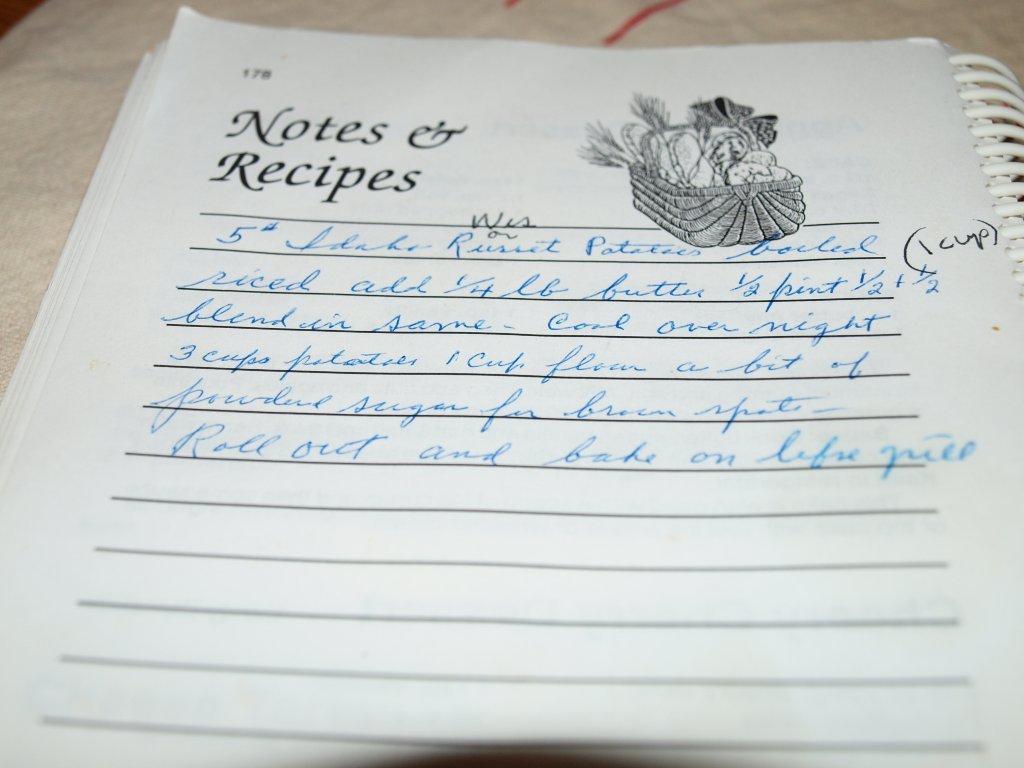
This is the handwritten recipe. You start with 5lbs of Russet potatoes. My Grandpa INSISTED on Idaho Russet….Trust him on this, and you won’t be disappointed! In fact my Aunt Ethel once tried to make this with red potatoes….as you can imagine it was disaster.
The use of Idaho Russets has a lot more to do with water content, so like I say…trust my Grandpa on this.
So, you peel and slice the 5lbs of Idaho Russet potatoes and put them on the stove to cook until soft…but no too soft.
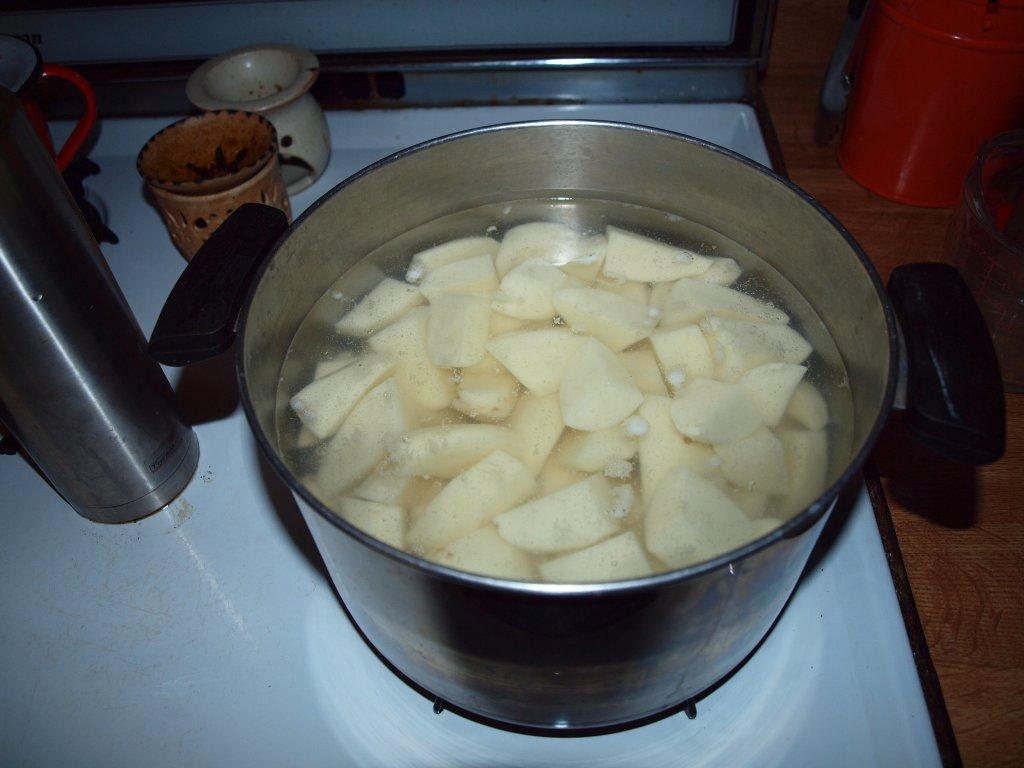
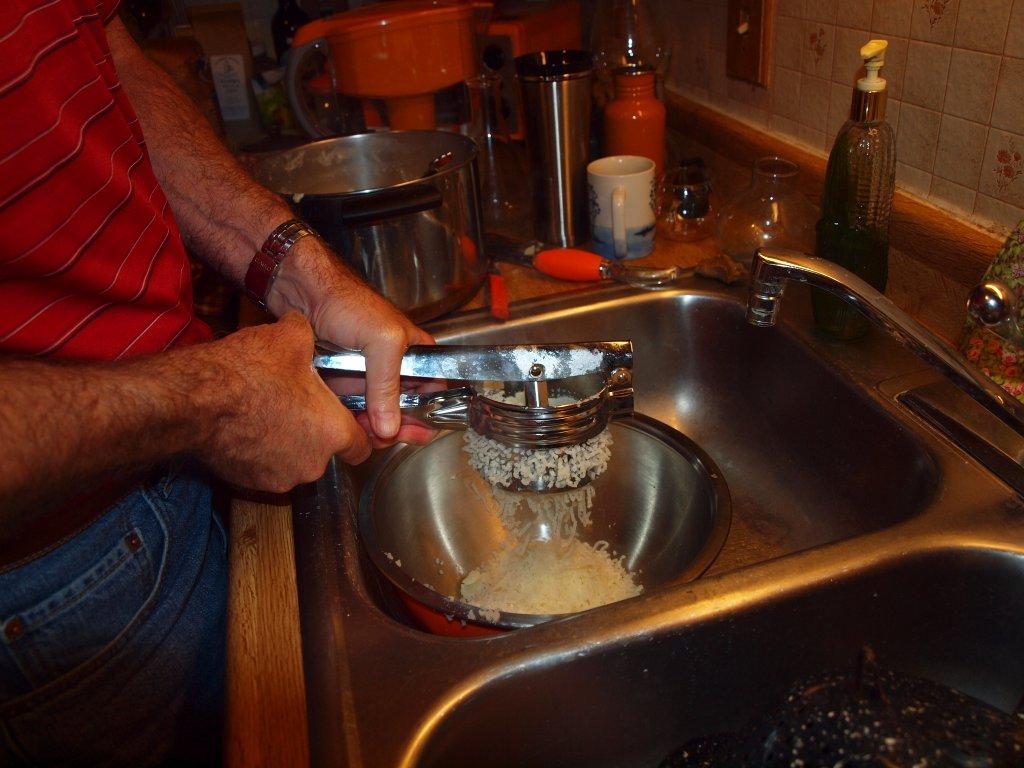
You then drain them and put them through a potato ricer into a nice big bowl.
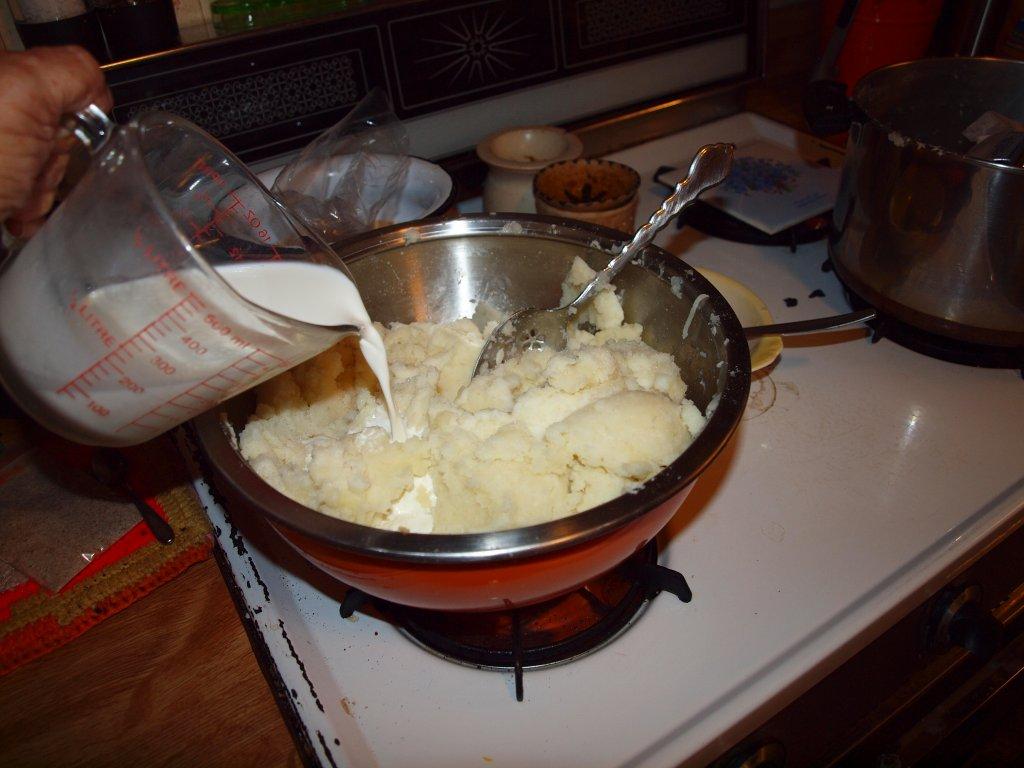
when they are still warm add in the butter, 1/2 and 1/2–cool overnight.
The next day, add in the flour until a soft dough forms, and you can make solid cylinder shaped potato logs!
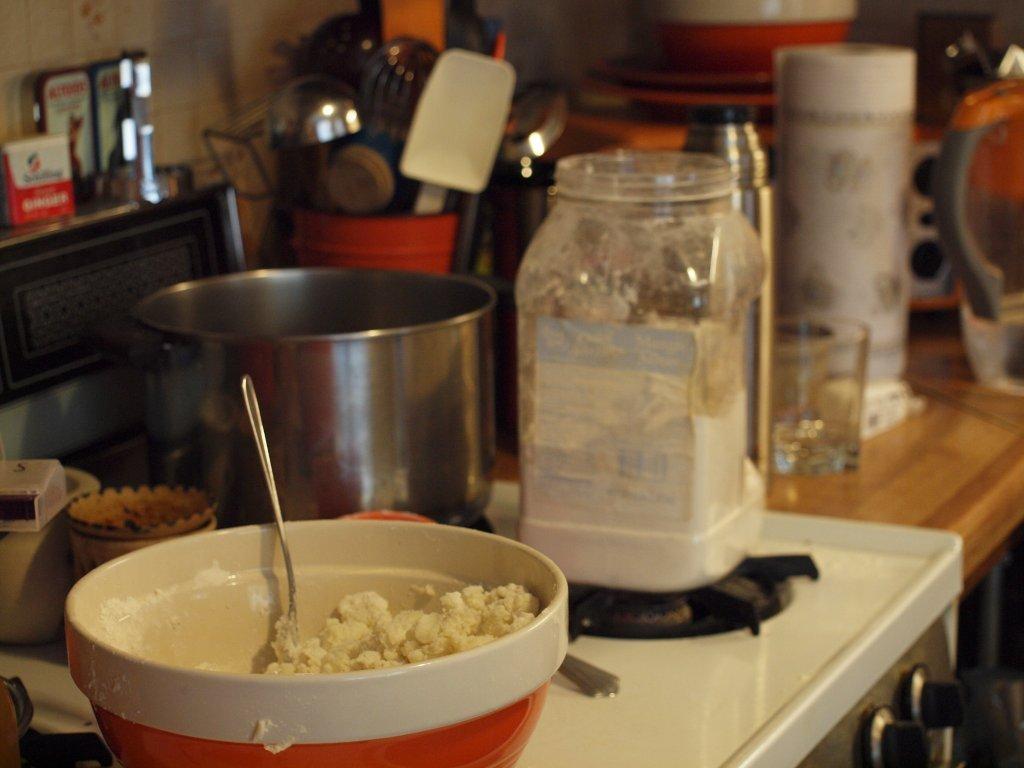
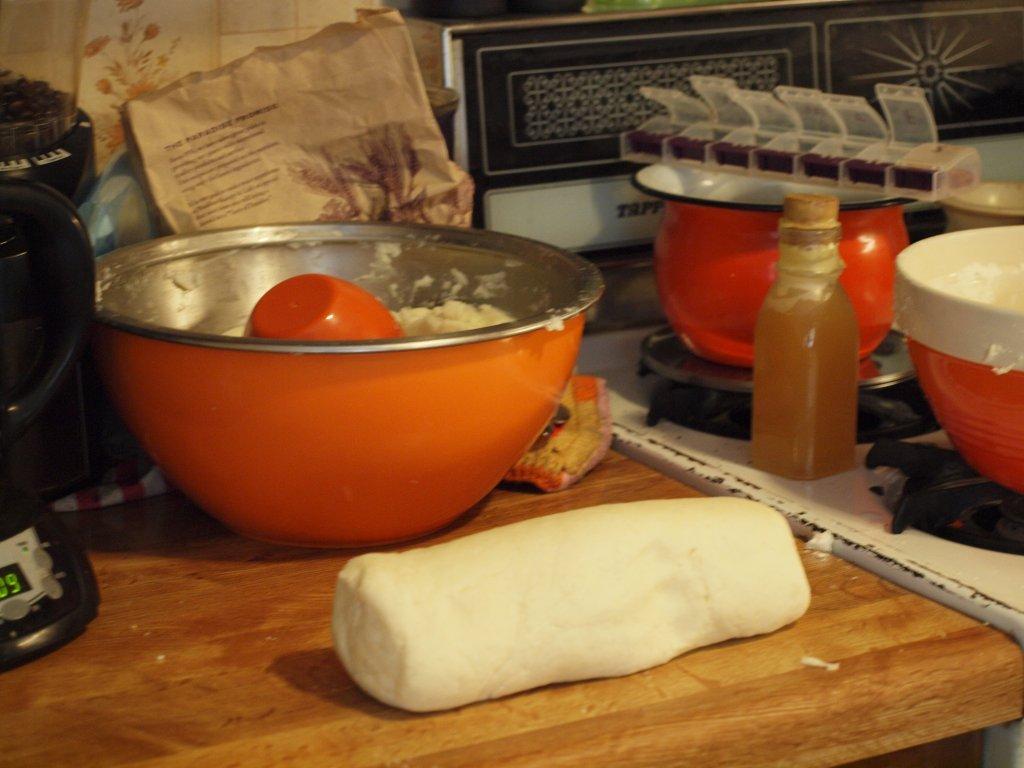
We usually get about three logs per 5lb bag of potatoes. Wrap each log up in plastic. Keeping the logs cold until use really helps the rolling process. I will even chop off only a few disks at a time to roll out; keeping the potatoes in the fridge as long as possible.
Once the potatoes are in logs and cold, you can get to the real nitty gritty.
Creating a good work station for lefse is important. We have a rolling station and a cooking station. We roll on the table and cook on the counter…..it is at this point that things can get a bit messy–and by messy I mean a dusting of flour over every surface.
So, when you are ready to start rolling, turn on the griddle—the hotter the better. (we have burnt out a few of these–so be careful they get dang hot!) Next to your griddle you want to have your handy dandy lefse turner, and a big clean cloth to wrap the lefse as it cools.
On the table you will be rolling, you want to have flour handy in a shaker or sifter and your rolling pins. A nicely floured pastry rolling board (covered), a small spatula for cleaning the board off, and a knife to cut off pieces of lefse dough.
Good music is optional, depending on the company.
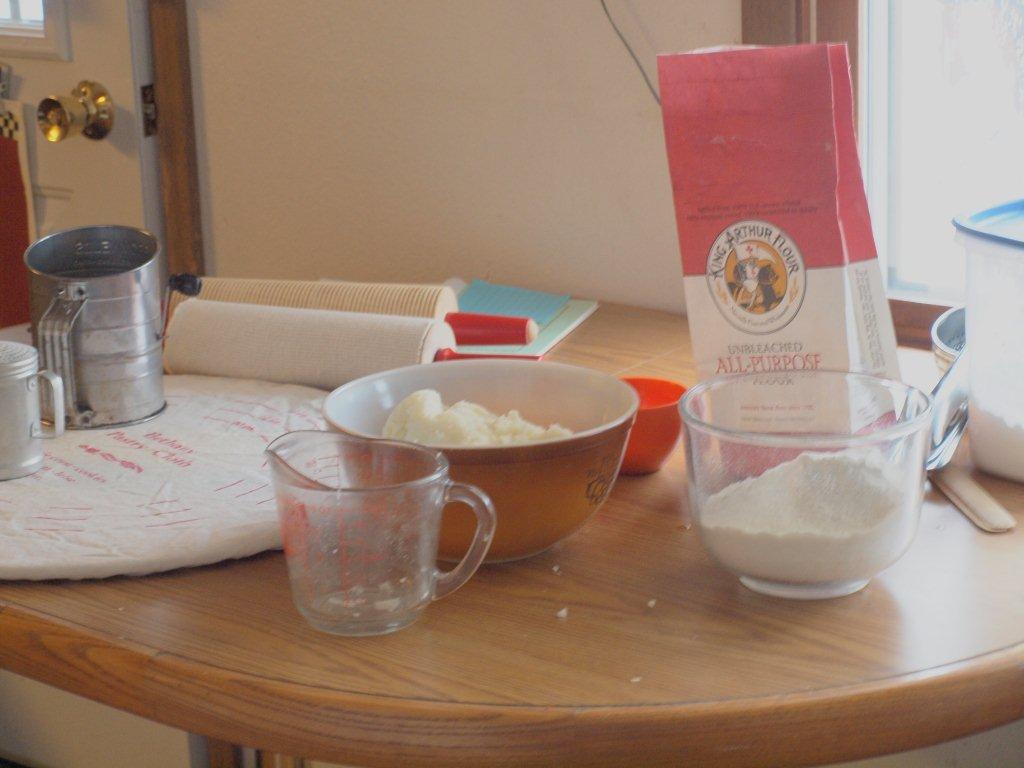
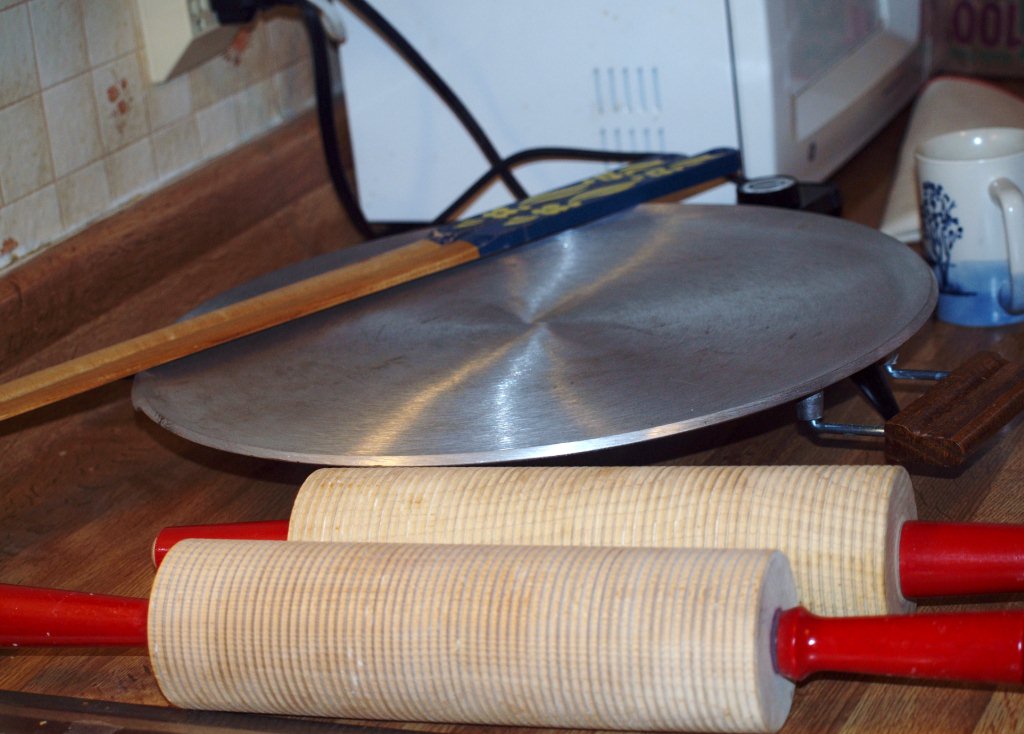
(The stick with the blue handle is the lefse turner, if you have separate people rolling and cooking, it is beneficial to have two of these.)
Start by flouring the pastry disk and placing a disk of the potato log onto it. (We have flour available at all times….you should be able to add a lot more flour into the mix.) A flour sifter is a nice tool to have but totally not necessary if you don’t mind tossing flour with your hands.
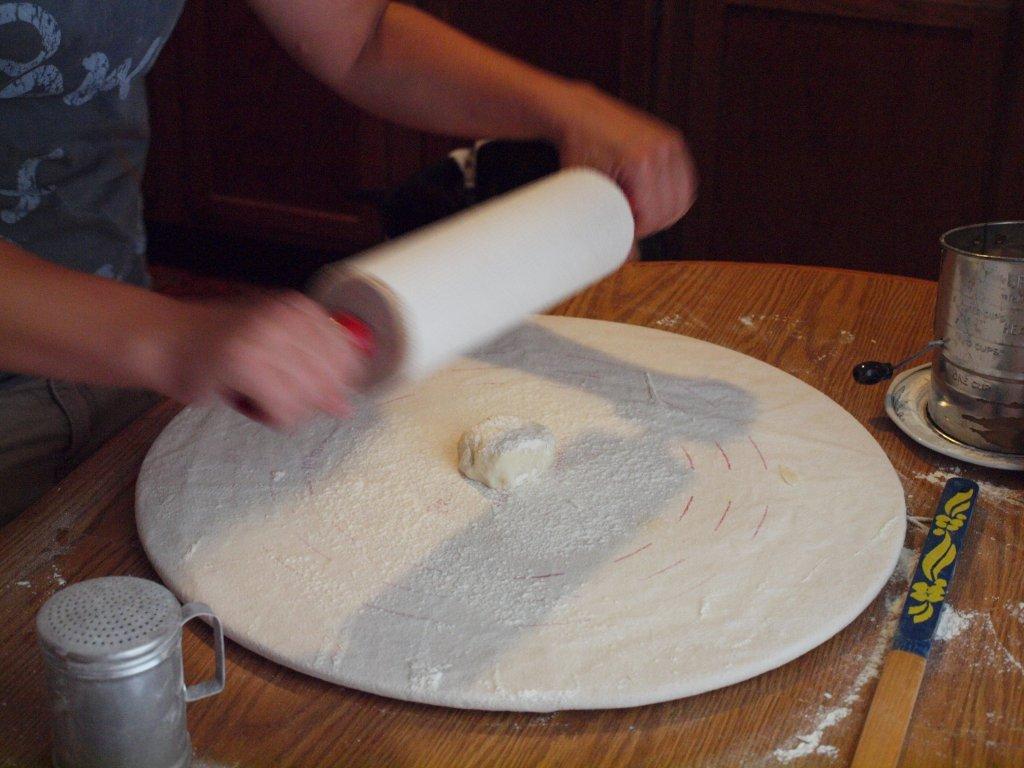
Then you roll!! I try (I STRESS TRY) to roll in a perfect circle (HA), very often though you get some pretty funny shapes.
The dough is different, more delicate than cookie or pie dough-so you have to be gentle. It also sticks a lot, so if you get spots of raw lefse on the pastry board or your pin–remove it! A spatula works well for this. They also make nifty little ‘socks’ for the rolling pins, they work pretty well but I never remember using them growing up. It’s all preference.
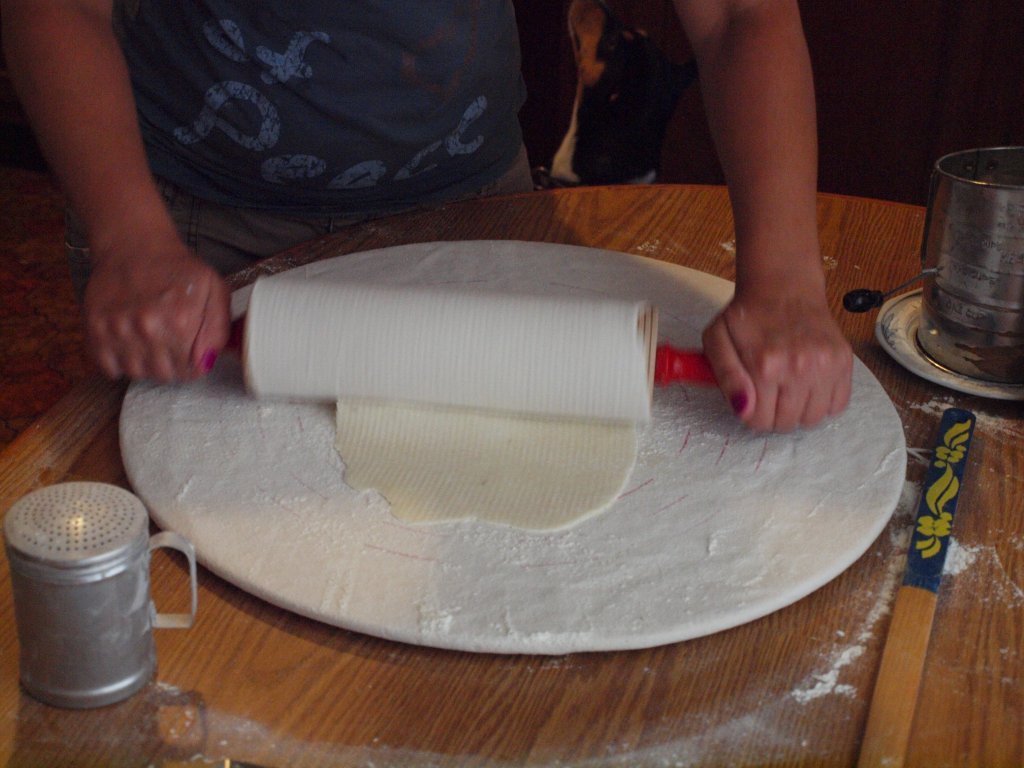
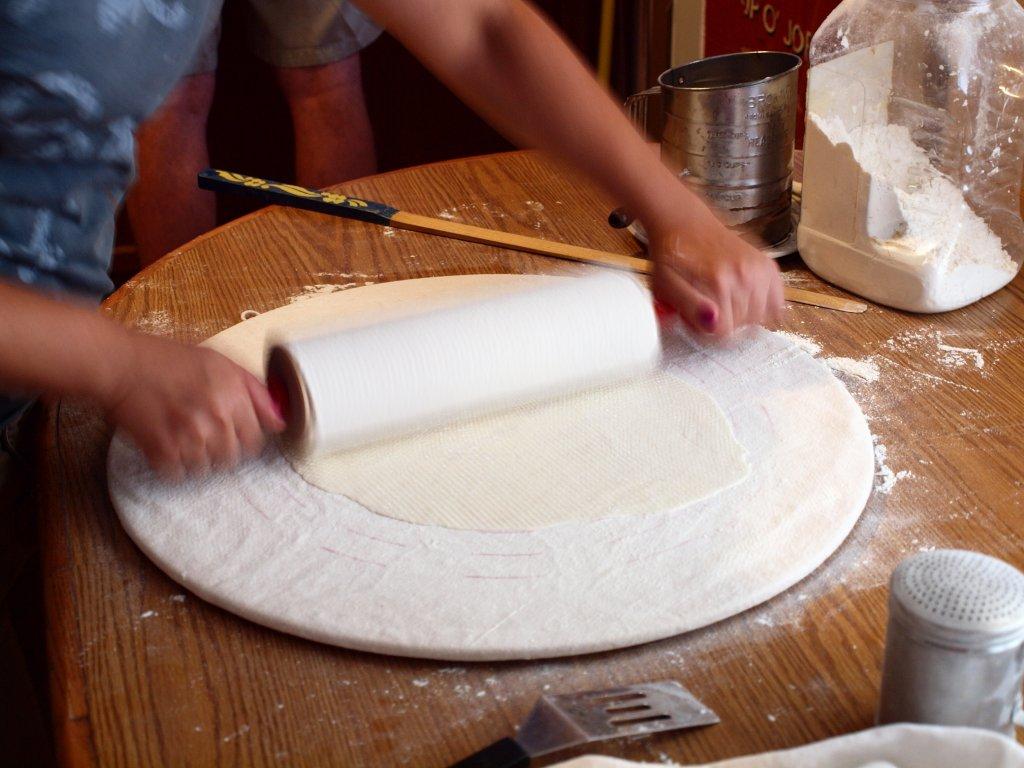
I know the lefse is thin enough when I can read the logo on the pastry cloth through the dough! Now comes the tricky part–getting the lefse off the board and onto the griddle.
This is the part when a well floured surface is helpful. You start by gently guiding your lefse turner under the rolled out lefse about halfway through and gently sliding all the way under and through to the other side……like I said, it has a habit of sticking, so you may not be able to just lift the lefse off at this point. Sometimes you have to gently ease it off the board by moving the turner from one side to the other in a gentle sawing motion.
Once it is loose, pick up the lefse on the lefse turner. It should be hanging from the middle. In the picture below the lefse is cooked , but you handle the raw pretty much the same way, just more carefully.
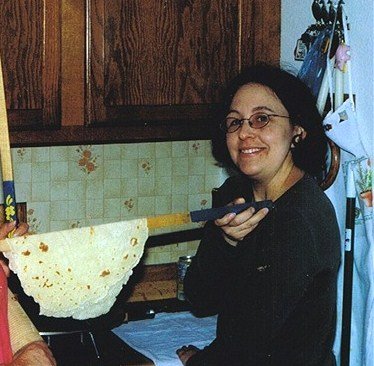
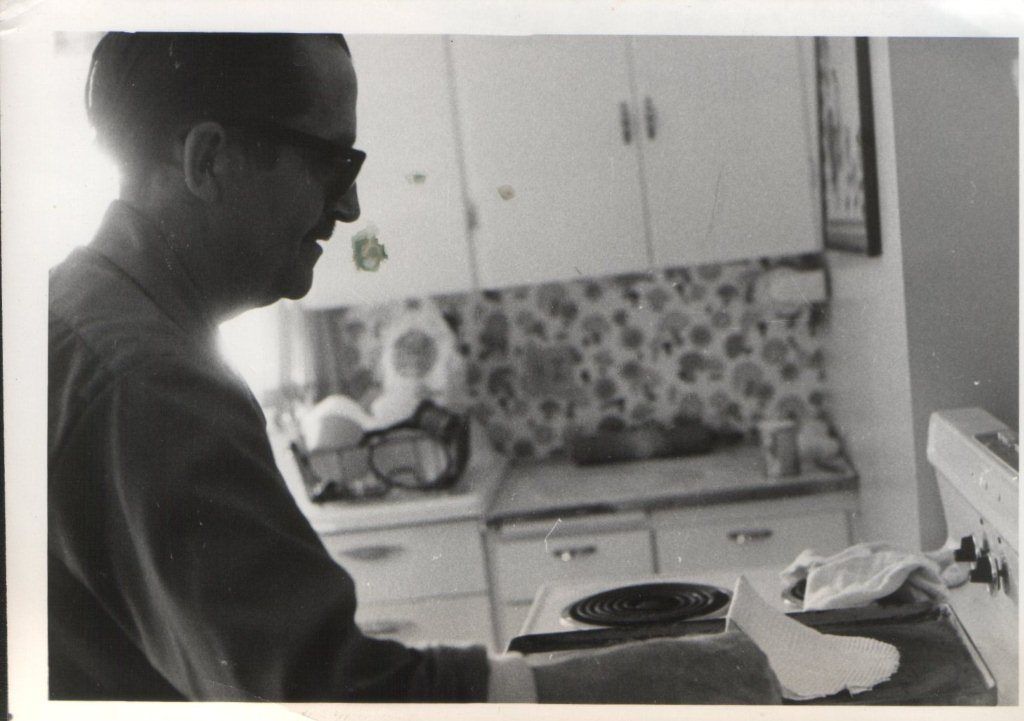
Once you have the lefse on the turner- carefully take it to the griddle and lay it down in half, then use your lefse turner and roll it over and over to flip the rest of the lefse onto the griddle. You are rotating the lefse turner in this stage, and allowing the lefse to move off the turner. This may also take a few times to get right….just keep trying! Here is a picture of the Master, my Grandpa rolling lefse onto the griddle. (notice they are cooking on the stovetop–that is hardcore!!)
Don’t worry too much if they fall apart and break or get holes (There WILL be casualties) it is an art that takes practice. We have lost many pieces to holes and breakage. I wouldn’t suggest re-rolling the lefse though, too much handling makes it tough and hard to roll again.
When cooking, it is best to not flip the lefse over and over—–let one side cook, then turn it and let the other side cook. The lefse will cook and get the signature brown spots on it….YUM.
When it is cooked to your preference take it off the griddle and lay it, folded in half between two clean dishtowels. Just keep stacking the lefse on top of each other. The slow covered cooling helps it stay soft. If you leave a piece out to cool quickly, you will notice that it dries up and gets crispy, so keep it covered!
At some point you may want to start a new pile, just to quicken the process.
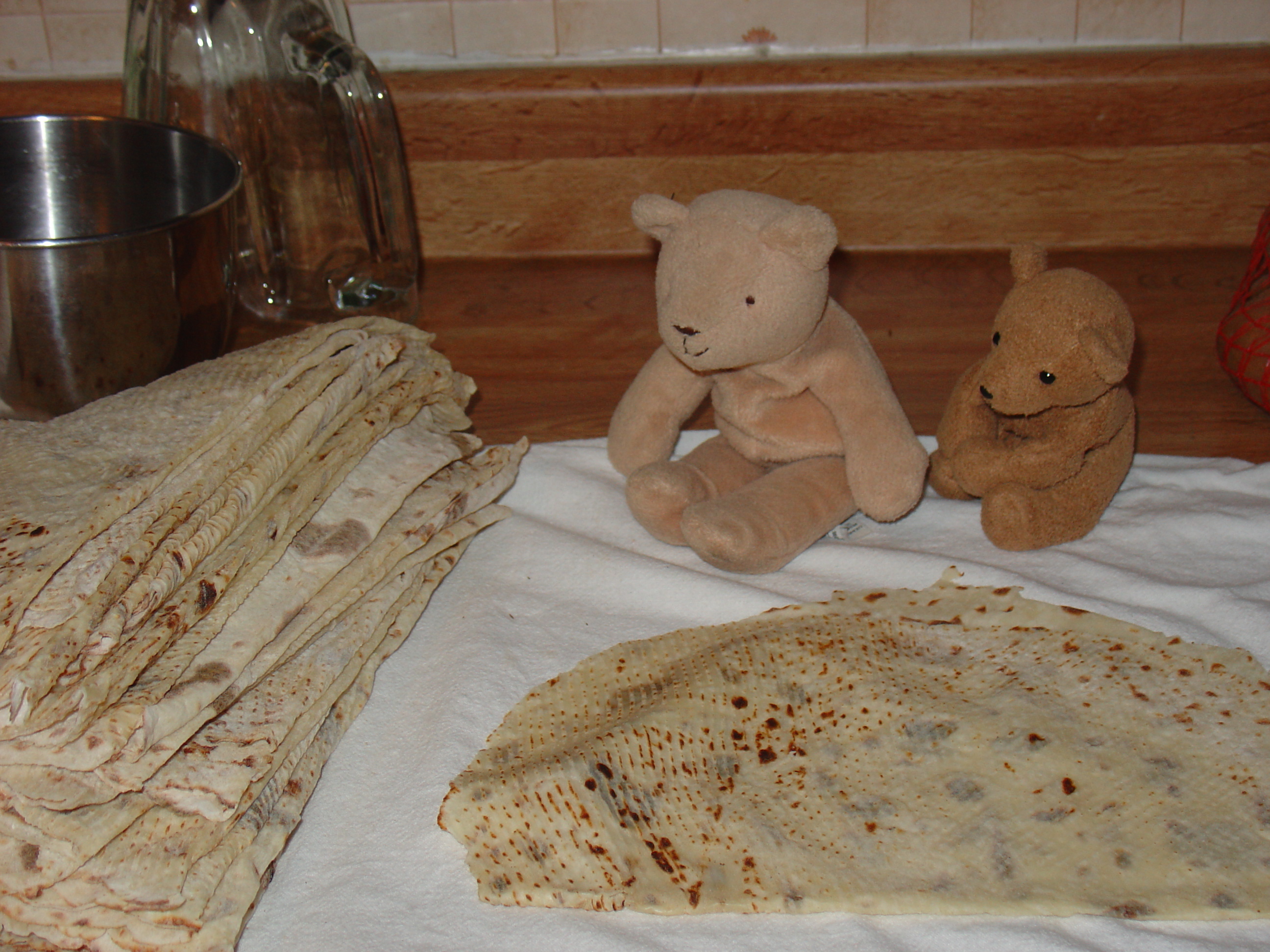
Below is a big ol’ pile of lefse waiting to be trimmed (yes, our family trims it into nice circles! cheaters!!!) Don’t mind the bears, it’s a family thing.
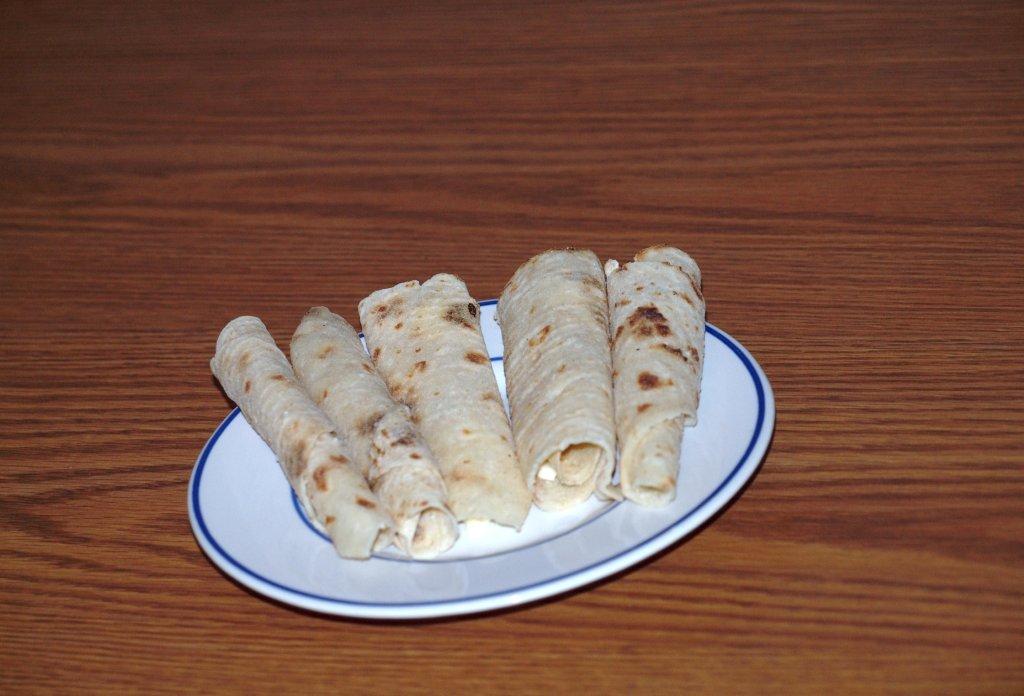
And at last, pieces of lefse rolled up with butter and sugar. The ultimate treat!
Questions? Comments? Ask away!


 trailstothemidwest
Leave a reply to nessa Cancel reply