I had an order of baby chickens come in the other morning. I needed to replace some of the birds that the raccoons kept taking from me and now that I have the raccoon problem solved it’s off to raise more layers.
I’d always bought my chicks from the local hatchery but didn’t think they hatched all summer so I ended up ordering from a company online. ( I found out later that the local hatchery does hatch chicks all summer. Oops.) The minimum order was 25 plus one free one which was more chickens than I needed but luckily my farming friend is willing to take the extras.
The first order that came was a disaster. Whoever was shipping them didn’t think about the heat and killed all but three. That kind of incompetence escapes me but thankfully the company shipped me a new batch for free and I received my babies healthy and happy.
I generally get a mix of different breeds when I get birds. I’m not partial to any particular kinds, I just like to see the different colored chickens running around the farm. They’re uniqueness also makes it easier for me to count them at the end of the day when I shut the door to the coop.
Raising baby chickens isn’t as hard as one may think. They are quite hardy little animals. When I first started raising chicks I would put them in a box in my room with a nice light set up and plenty of food and water. Was fun to listen to their soft chirping at night but as they got older it just got annoying (and smelly) so I knew I needed a better set up. We took one of the old calf pens in the nursery, enclosed it with plywood, added a door,

cut two holes in the top for the heat lamp cords to come through
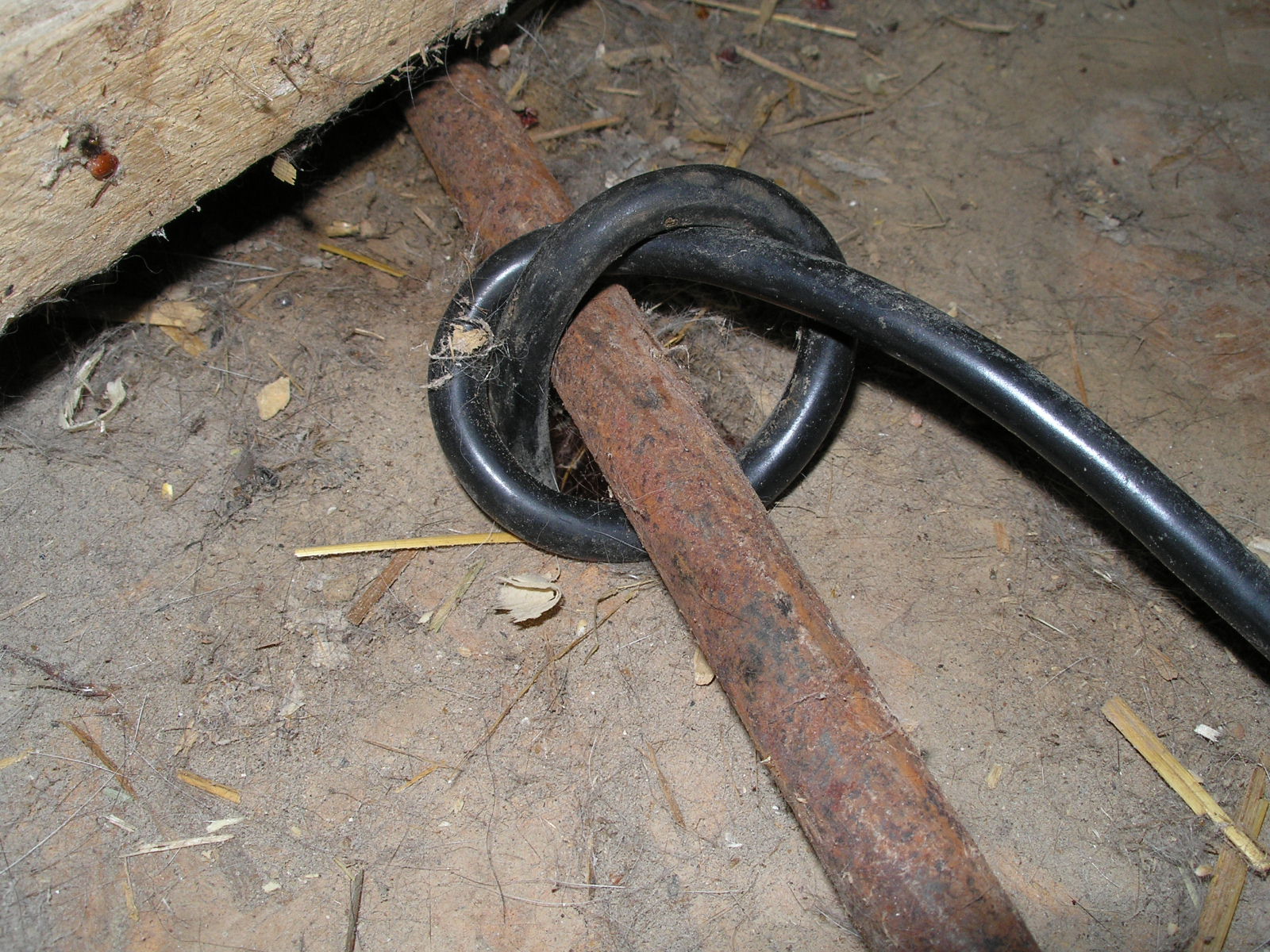
and we had a hotbox. (This also serves as a nice place to warm up baby calves.) I learned very quickly to cover up any cracks near the bottom edges when the barn cats started “fishing” for chickens. If they could fit their paws through a space it needed to be covered. Otherwise they would eventually pull out a bird and run off with it. Now that my only predator problem is solved I rarely lose any babies.
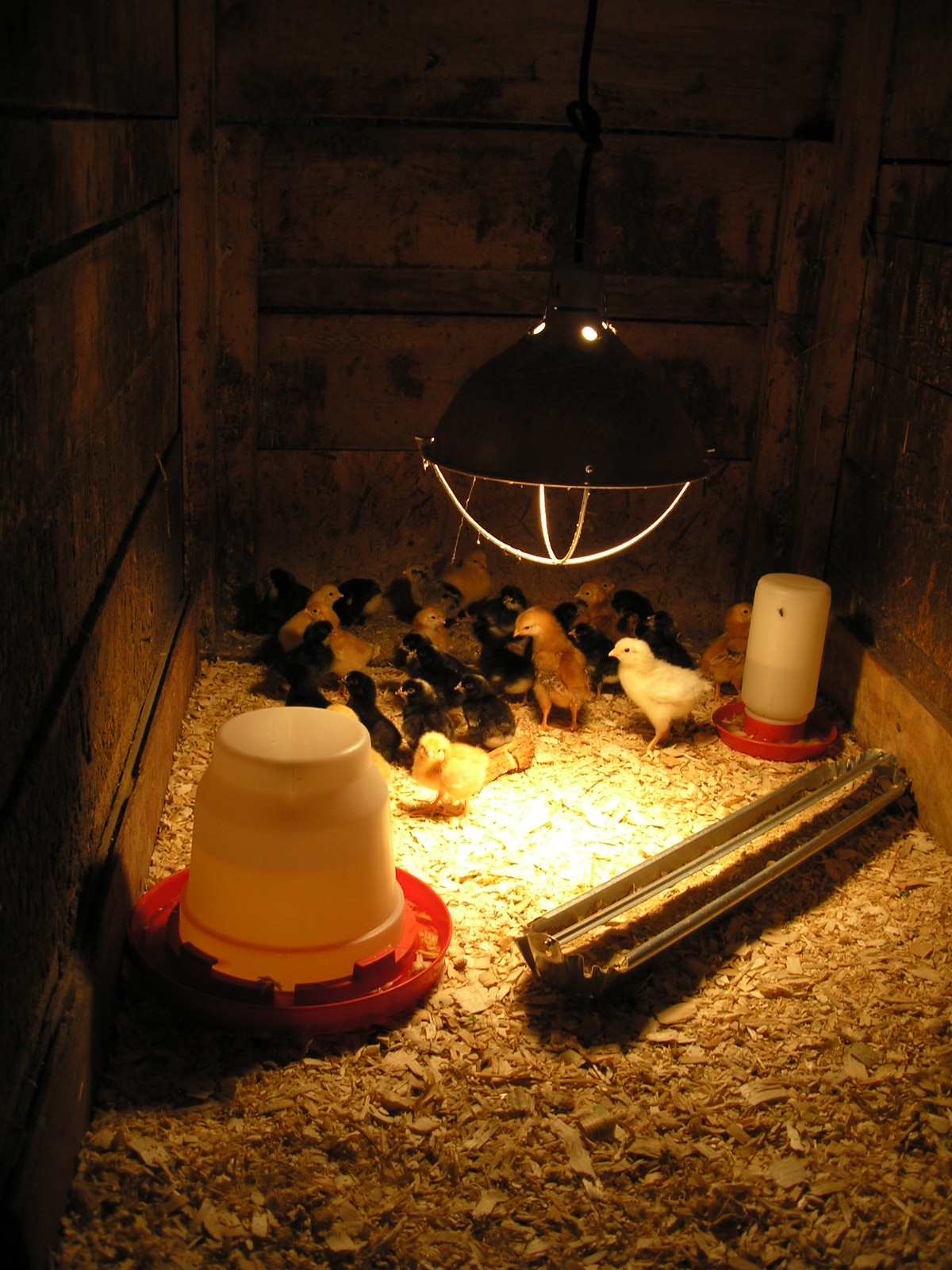
I bed the hotbox with wood shavings. I do like straw but sometimes I don’t have that much as most of it is used for the pens in the barn when the cows are calving. I much prefer the shavings with my chickens, as it is inexpensive and very easy to clean even when it’s wet.
I always put a pinch of animal electrolyte/vitamin powder in their water for the first week to help relieve the stress of shipping. When I get my new birds I make sure that I observe them for awhile and if there are any that are slower than the rest I dip the end of their beaks in the water to encourage them to drink. This has always worked for me and any sluggish birds quickly recover.
I keep observing them closely for weeks and even months for any kind of sicknesses. The only problem that I have had is coccidiosis which can be treated, but it is easier just to try to avoid it. Making sure the water and bedding are clean is the biggest thing in preventing this problem.

Once they are a week old they will start getting pin feathers and after that they look pretty darn ugly for awhile! Once they get big enough to not be eaten by the cats they will be moved to a secondary holding pen across from the regular chicken coop and eventually integrated in with the older chickens in the main coop.


 trailstothemidwest
Leave a comment